
Pancreas Transplantation
Pancreas Transplantation
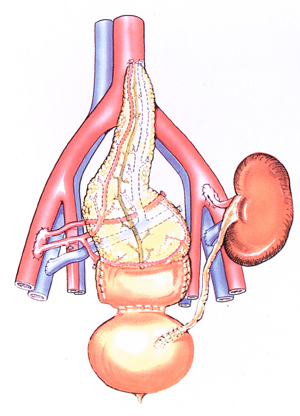
Pancreas transplantation. In the middle one can see the transplanted Pancreas (marked with little lines).
Young, insulin-dependent sufferers of Diabetes mellitus can be afflicted with a number of conditions, caused by a malfunctioning metabolism, such as rhenal failure, blindness, extensive damage to nervous system and arteries with severe consequences for the blood supply to the heart, brain or extremities. This disease is caused by the destruction of insulin-producing islet cells in the pancreas. Glucose metabolised through the intake of food cannot enter body cells in the absence of insulin. This will cause multiple cell function failure.
As a treatment for Diabetes mellitus Type I, insulin must therefore be injected at regular intervals to ensure near-normal blood glucose levels. If levels cannot be maintained, damage as described above and additional conditions will be the outcome. Long-term damage is likely to occur.
This vicious cycle can be arrested and reversed by a combined pancreas and kidney transplant, which will eliminate both rhenal failure and establish a normal glucose metabolism. A pancreas transplant only (without kidney) can be beneficial in exceptional circumstances.
Side effects
As with all other organ transplants, patients will have to take medication on a life-long basis, to suppress the rejective reaction of the immune system. These drugs are essential to keep transplanted organs functioning and have to be taken at precise time intervals. The required dosage must be determined by assessing levels in the blood of the patient. One of the side effects of the procedure is an increased vulnerability to bacterial, viral and fungal infections. Severe diseases such as lymphoma may also be induced by a long-term intake of immune system suppressing drugs.
Increased survival chances
Despite these side effects, the longer-term success of a pancreas-kidney transplant is excellent, with more than 80% of the organs still operational after 5 years. For young diabetics this is good news: their survival chances are better and life quality improves markedly as daily injections and frequent dialyses are no longer necessary.
There is no need to transplant patients who do not suffer from diabetes-induced conditions and can keep their blood sugar at normal levels.
to top